
Share this article


Concrete vs Asphalt: Which Should You Choose?
.svg)
February 6th, 2026
.svg)
4 min.
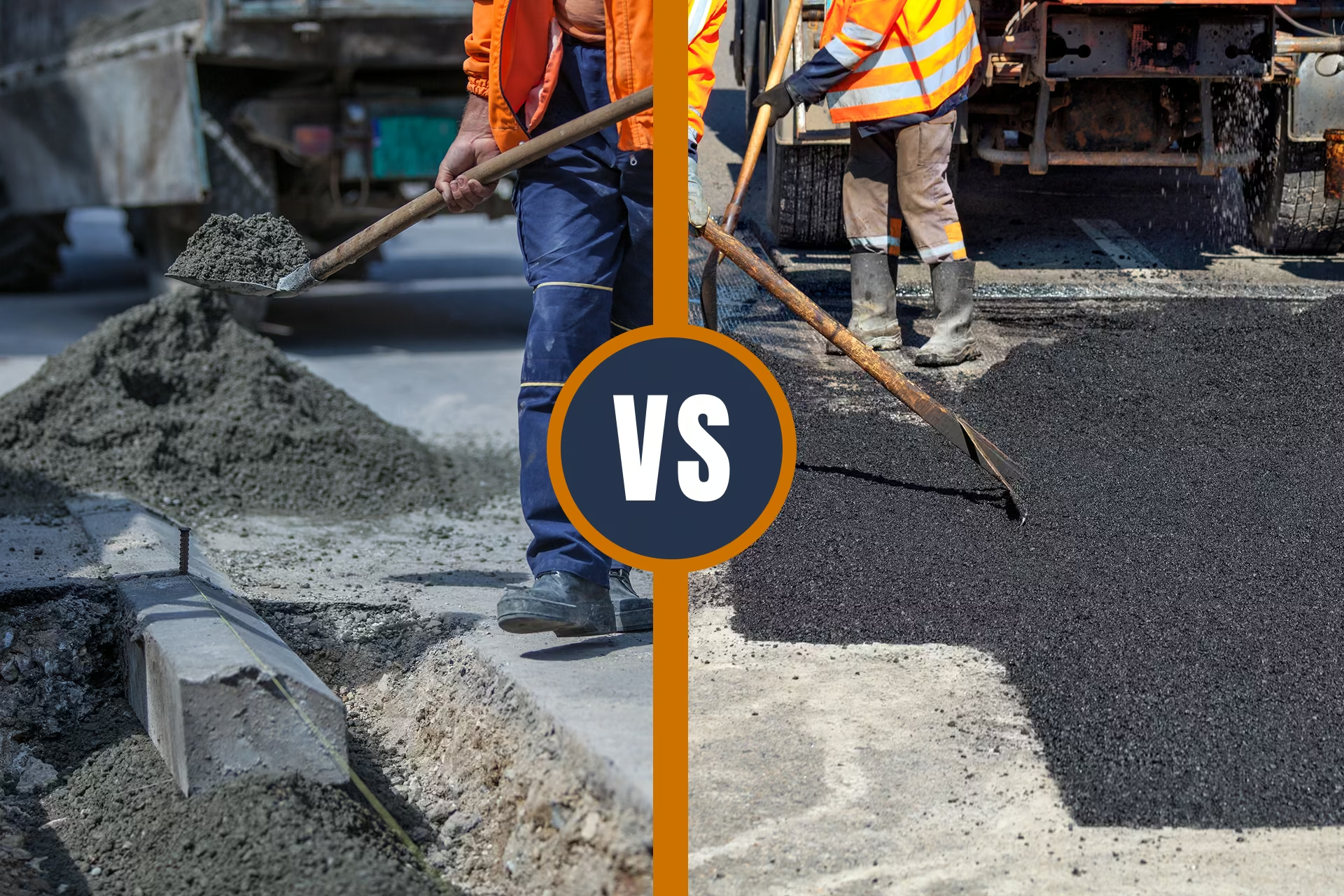

Choosing between concrete and asphalt is one of the most common decisions homeowners, property managers, and developers face when planning a driveway, parking area, or paved surface. While both materials are widely used and proven, they behave very differently over time. The right choice depends less on preference and more on how the surface will be used, maintained, and exposed to environmental conditions.
At a glance, concrete and asphalt can appear interchangeable. Both provide durable, functional surfaces and can be installed in similar locations. However, differences in composition, installation methods, and long-term performance mean that each material excels under different circumstances. What works well for a residential driveway may not be ideal for a commercial lot, and what performs best in one climate may struggle in another.
Understanding these differences upfront helps avoid costly mistakes. Decisions made at the installation stage affect maintenance requirements, lifespan, repair options, and overall ownership cost for years to come. Rather than asking which material is “better,” a more useful question is which material is better suited for the specific demands of the project.
This guide breaks down the core differences between concrete and asphalt, including cost, durability, maintenance, appearance, and environmental considerations. The goal is not to steer you toward one option, but to give you the context needed to make a confident, informed decision based on how the surface will actually perform over time.
Concrete vs Asphalt: Understanding the Core Differences
Concrete and asphalt are often compared because they serve similar purposes, but they are fundamentally different materials with distinct performance characteristics. Understanding those differences is the foundation for making a sound decision.
Concrete is a mixture of cement, aggregates, and water that hardens through a chemical reaction called hydration. Once cured, it forms a rigid, load-bearing surface. Asphalt, by contrast, is a flexible pavement made from aggregates bound together with bitumen, a petroleum-based binder. It hardens as it cools but retains flexibility throughout its lifespan.
This rigidity versus flexibility is the defining distinction. Concrete resists deformation under load but can crack when stressed. Asphalt absorbs movement and stress more easily but can rut, soften, or deform over time. Neither characteristic is inherently better; each performs differently depending on how and where the surface is used.
How Concrete and Asphalt Are Installed and What That Means Long Term
Installation methods play a major role in how concrete and asphalt perform over time. Concrete installation begins with excavation, grading, and subgrade preparation, followed by formwork, reinforcement placement, pouring, finishing, and curing. The curing process is critical, as concrete continues to gain strength over several weeks.
Because concrete hardens into a single rigid slab, any deficiencies in preparation or curing become permanent. Long-term performance is largely determined by what happens before and immediately after the pour.
Asphalt installation also begins with excavation and base preparation, but the surface is placed hot and compacted in layers. It becomes usable much sooner than concrete and continues to cure as oils evaporate over time. Because asphalt remains flexible, it can tolerate minor subgrade movement better in the short term.
However, that flexibility also means asphalt is more dependent on ongoing maintenance to preserve structural integrity.
Upfront Cost Comparison: Concrete vs Asphalt
Upfront cost is often the first factor people consider when choosing between concrete and asphalt. In most cases, asphalt has a lower initial installation cost. Materials are less expensive, installation is faster, and the surface can be used almost immediately.
Concrete typically costs more upfront due to higher material costs, longer labor time, and curing requirements. Decorative finishes or reinforcement further increase the initial investment.
While asphalt’s lower entry cost can be appealing, it should be evaluated alongside long-term ownership costs. Concrete’s higher upfront price often reflects its longer service life and reduced maintenance frequency, which can balance out over time depending on usage and conditions.
Lifespan and Durability: Which Material Lasts Longer
Concrete generally outlasts asphalt when properly installed and maintained. A well-constructed concrete surface can last several decades, particularly in applications such as driveways, sidewalks, and parking areas with moderate traffic.
Asphalt surfaces typically have a shorter lifespan. Over time, exposure to sunlight, oxygen, and water causes the binder to oxidize and become brittle. This leads to cracking, raveling, and surface deterioration.
Durability is also influenced by load demands. Concrete performs well under static and heavy loads, while asphalt handles dynamic loads and vibration more effectively. The material that lasts longer depends on whether rigidity or flexibility better suits the application.
Maintenance and Repair Expectations Over Time
Maintenance requirements differ significantly between concrete and asphalt. Concrete generally requires less frequent maintenance but more complex repairs when issues occur. Cracks are often sealed, and surface repairs can be visible if color matching is difficult.
Asphalt requires more regular maintenance, including sealcoating, crack filling, and periodic resurfacing. These tasks help extend lifespan but add recurring costs over time. The benefit is that asphalt repairs are often faster and less visually noticeable.
Maintenance tolerance is a key decision factor. Those willing to perform regular upkeep may find asphalt manageable, while those seeking lower long-term maintenance demands may prefer concrete.
Performance in Heat, Cold, and Changing Weather Conditions
Climate plays a critical role in material performance. Concrete is less affected by heat but can be susceptible to cracking during freeze-thaw cycles if moisture penetrates the surface. Proper joint placement and drainage are essential in colder regions.
Asphalt performs well in cold climates because its flexibility allows it to expand and contract with temperature changes. However, in hot climates, asphalt can soften, leading to rutting or surface deformation under heavy loads.
Sun exposure also affects performance. Asphalt absorbs heat and can become uncomfortably hot, while concrete reflects more sunlight and maintains a lower surface temperature. Regional climate should be a major consideration when choosing between the two.
Appearance, Design Options, and Curb Appeal Differences
Concrete offers greater design flexibility than asphalt. It can be finished in a variety of textures, colors, and patterns, including decorative or stamped finishes that enhance curb appeal. These options allow concrete surfaces to complement architectural styles and landscaping.
Asphalt provides a clean, uniform appearance but limited design variation. Over time, its appearance fades as oils evaporate and the surface oxidizes. Sealcoating restores color temporarily but does not offer customization.
For projects where visual impact matters, concrete often provides more long-term aesthetic value. For purely functional surfaces, asphalt’s simplicity may be sufficient.
Environmental Impact and Drainage Considerations
Environmental considerations are increasingly part of pavement decisions. Concrete production generates significant carbon emissions due to cement manufacturing, while asphalt relies on petroleum-based materials.
However, concrete’s longer lifespan can reduce the frequency of replacement, potentially offsetting some environmental impact over time. Asphalt’s recyclability is often cited as an advantage, as reclaimed asphalt pavement can be reused in new installations.
Drainage is another factor. Concrete surfaces can be sloped precisely to manage runoff, while asphalt’s flexibility may accommodate permeable design solutions more easily. Proper drainage planning is critical regardless of material choice.
When Concrete Makes More Sense Than Asphalt
Concrete is often the better choice for applications requiring long-term durability, minimal maintenance, and resistance to heavy static loads. Residential driveways, commercial entrances, loading areas, and sidewalks frequently benefit from concrete’s rigidity.
It also makes sense where appearance matters or where high temperatures could cause asphalt to soften. In settings where maintenance access is limited or long service life is prioritized, concrete provides a more stable solution.
Concrete’s higher upfront cost is often justified when long-term performance and reduced maintenance outweigh initial savings.
When Asphalt Is the Better Choice for Your Project
Asphalt is often better suited for projects requiring fast installation, lower initial cost, and flexibility under movement or vibration. Roads, large parking lots, and temporary or phased developments frequently rely on asphalt for these reasons.
It performs well in colder climates and areas where soil movement is a concern. Asphalt’s repairability also makes it practical where frequent access or utility work is expected.
For projects where budget constraints or speed are primary concerns, asphalt offers a functional and adaptable solution.
Conclusion
Concrete and asphalt are not competing materials so much as tools suited to different conditions. Each offers advantages depending on how a surface will be used, maintained, and exposed to environmental stress.
By understanding differences in installation, cost, durability, maintenance, and performance, decision-makers can choose the material that aligns with their priorities rather than defaulting to habit or price alone. The best choice is the one that balances function, longevity, and realistic expectations over time.
%20(1).avif)
